Source Anti Slip Car Wedge Cushion for Driving, Travel, and Rest
Compare 30 anti slip car wedge cushion options from Zhejiang suppliers. These foam and polyester products feature breathable designs for neck support, seat comfort, and driving safety with customizable sizes and logos; compare the available evidence and request quotations based on your requirements.
Key considerations
Products List
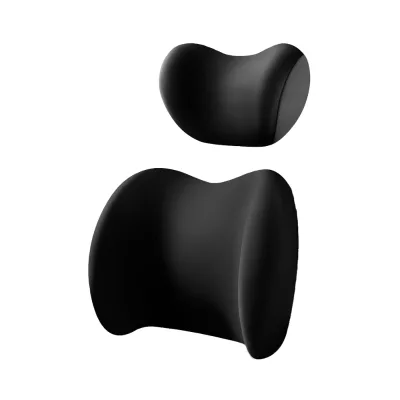


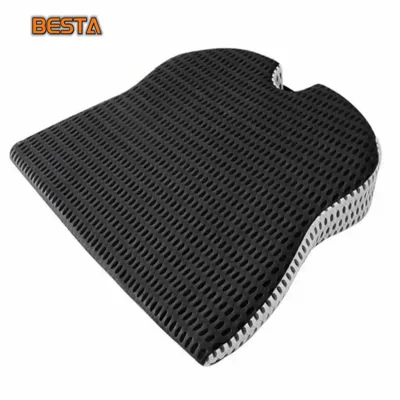
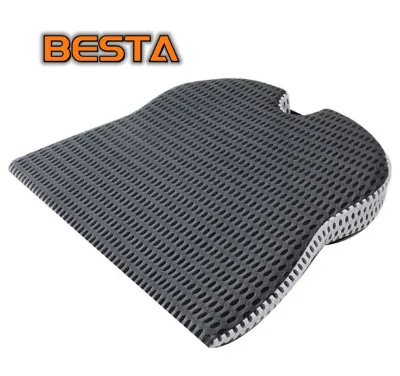
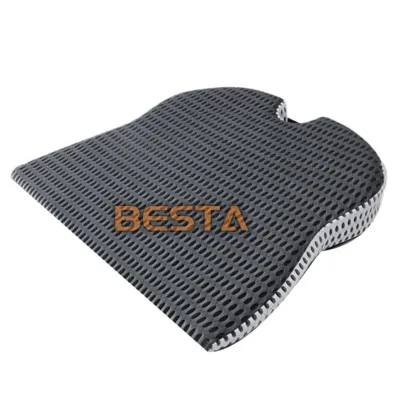


$25.00 - $27.00
Moq: 2000

$25.00 - $27.00
Moq: 2000
Comprehensive Sourcing Guide
Anti Slip Car Wedge Cushion Sourcing Guide
Sourcing an anti slip car wedge cushion for resale or fleet use requires disciplined verification, because listings in this category vary widely in materials, construction, and commercial terms. The products observed are positioned as portable, adjustable, breathable cushions made primarily of foam with memory sponge fabric, intended for neck and back support during driving. Some related listings extend into full seat cover sets, so buyers must first confirm whether a listing refers to a single wedge cushion or a multi-piece kit before comparing prices.
This guide walks through the key decisions a B2B buyer faces: defining product scope from listing signals, verifying technical specifications, requesting appropriate compliance documentation, understanding cost drivers and commercial terms, qualifying suppliers, and planning long-term procurement. Each section is built around the evidence available on product pages—attributes such as place of origin, material composition, package formats, and stated minimum order quantities—combined with standard category knowledge. Treat every listed attribute as an observation to confirm, not a guarantee that applies uniformly across all thirty products in the range.
Product Scope and Observed Listing Signals
The observed listings cluster around two product families. The first is a dedicated wedge or neck cushion type: foam-based, weighing approximately 490 grams, sized around 34.49 x 30.51 x 14.81 cm, styled in black, and marketed for driving use with neck and back support. The second family is broader car interior covering, including nine-piece seat cover suits and seat cushions in rectangle or square shapes, made from 100% polyester with PVC or universal backing materials. Buyers should map which family each supplier actually manufactures before requesting quotes.
Listing signals worth noting include Zhejiang, China as the stated place of origin across listings, port options of Shanghai or Ningbo, and models such as 103273, 104036, and 104047. Customization is listed as available, with OEM logo acceptance, PVC bag or OPP pack with color card packaging, and carton outer packing. MOQs observed span from 10 pieces up to 2,000, with specific values of 400 sets, 600 pieces, and 800 pieces appearing on individual listings—so volume expectations differ significantly by product type and should be confirmed per SKU.
Technical Specifications to Verify
For the wedge cushion itself, verify the foam density and the memory sponge fabric specification, since "foam" and "memory sponge" describe material families rather than performance grades. Request the actual density figure, recovery time, and thickness tolerance against the stated 34.49 x 30.51 x 14.81 cm dimensions. Confirm the 490-gram weight tolerance in production, as significant deviations signal filler substitution. Ask how the anti slip function is achieved—textured base fabric, silicone dots, or wedge geometry—because the mechanism determines durability after repeated washing.
For construction, the listed technics include both woven and knitted fabrics, which behave differently in stretch, breathability, and pilling. Confirm which applies to your SKU and request a wash test protocol, since listings claim washable and breathable features. For seat cover variants, the stated fabric is compound mesh pressure line with 1 cm thickness; verify seam strength and elastic strap quality for universal fitment. Finally, confirm color options in person—listings show "selective" or "optional" colors, but actual swatch availability must be checked against the black standard style.
Compliance and Safety Documentation
Foam and fabric automotive accessories are generally low-regulation items, but buyers should still require documentation rather than assume compliance. Ask suppliers for material safety declarations covering the foam, memory sponge, polyester fabric, and any adhesives or dyes used, particularly regarding odor and volatile emissions inside a closed vehicle cabin. Request test reports relevant to your destination market's requirements for textile products and children's contact items if applicable—do not accept a supplier's claim of certification without seeing the actual report and matching batch.
Because listings state customization and OEM logo acceptance, verify that any branded materials, inks, or embroidery threads used for logos meet the same documentation standard as the base product. If your market requires labeling for fiber content, care instructions, or country of origin, confirm the supplier can produce compliant labels in the correct languages before mass production. Buyers importing through Shanghai or Ningbo ports should also confirm that packaging—PVC bags or OPP packs with color cards—meets any local packaging or suffocation-warning requirements applicable in the destination market.
Cost Drivers and Commercial Terms
Price observations across the category range from roughly $2.13 to $85 per unit, reflecting the spread between single wedge cushions and nine-piece full seat cover suits. When benchmarking quotes, normalize against product family first: a cushion and a full set are not comparable on unit price. Main cost drivers include foam density and thickness, fabric type (knitted versus woven, mesh compound versus plain polyester), packaging format, and customization level. A one-centimeter fabric thickness difference or added PVC backing materially changes cost.
On commercial terms, the observed MOQs range from 10 to 2,000 units, with 400 sets, 600 pieces, and 800 pieces cited on specific listings—negotiate MOQ against your first-order testing strategy rather than committing to maximum volumes upfront. Listings reference payment via West Union, PayPal, and T/T; for larger orders, T/T with a deposit balance structure is the conventional expectation, and buyers should confirm which instruments a given supplier actually accepts. Shipping from Shanghai or Ningbo should be quoted both FOB and delivered so freight and customs costs are visible in your landed cost model.
Supplier Qualification and Quality Control
Qualify suppliers by product family rather than assuming a seat cover factory produces cushions to the same standard. The observed origin concentration in Zhejiang, China, is typical for this category, but origin alone is not a quality signal. Request business license verification, factory photos or video audits, and references from export customers in your market. For customized orders with OEM logos, ask for previous customization examples and confirm the supplier controls the printing or embroidery process in-house or manages subcontractors reliably.
Establish a pre-shipment quality control protocol before the first order: define AQL sampling, check dimensional tolerance against the 34.49 x 30.51 x 14.81 cm specification, verify weight near 490 grams, inspect stitching and fabric quality, and test washability on sampled units. For seat cover sets, count components to confirm all nine pieces are present and color-matched. Require a retained sample from the approved pre-production run for every reorder, and specify that reorders must match the retained sample on material, color, and construction before shipment is released.
Long-Term Procurement Checks
Plan ongoing procurement around consistency rather than one-off price. Reorder consistency is the largest long-term risk: foam density, fabric dye lots, and elastic components often drift between production runs. Lock specifications in a written technical sheet referencing the agreed model numbers (such as 103273, 104036, or 104047), retained samples, and packaging formats (PVC bag, OPP pack with color card, carton). Review the retained sample against incoming shipments each season, since the products are classified for four-season use and may sell year-round.
Maintain a dual-supplier posture within Zhejiang or adjacent sourcing regions so a single factory disruption does not halt your supply, and periodically re-quote the category, since foam and polyester input costs move with raw material markets. Track customer feedback on the anti slip performance and durability of cushions specifically, as this drives repeat purchase rates more than initial price. Finally, revisit MOQ and payment terms annually as volumes grow—suppliers that accepted 600–800 piece minimums on early orders may extend flexibility once a trading history and payment record are established.
FAQs
What material is used for the anti slip car wedge cushion?
The cushion is made from foam with a memory sponge fabric type. This material provides breathable comfort and adjustable support for the neck and back. It is designed to be washable and suitable for four seasons. The product weighs 490 grams and comes in a black style. It is manufactured in Zhejiang, China, using woven or knitted technics depending on the specific model.
Can the anti slip car wedge cushion be customized?
Yes, customization is available for this product. Buyers can request OEM logos and select from optional colors. The supplier accepts custom orders with a minimum order quantity of 400 sets or 800 pieces, depending on the specific item. Payment options include West Union, Paypal, and T/T. The product is packaged in PVC bags or OPP packs with color cards for safe delivery.
What is the minimum order quantity for this car cushion?
The minimum order quantity varies by product model. For some items, the MOQ is 400 sets, while others require 800 pieces or 600 pieces. The observed MOQ range across listings is 10 to 2000 units. Buyers should check the specific model details, such as prod_model 103273 or 104036, to confirm the exact MOQ required for their order.
How is the anti slip car wedge cushion packaged?
The product is packaged in PVC bags or OPP packs with color cards. For bulk orders, items are packed in cartons. The single package size is approximately 34.49 x 30.51 x 14.81 cm. The selling unit is a single item. This packaging ensures the cushion remains clean and protected during shipping from Shanghai or Ningbo ports.
What are the dimensions of the anti slip car wedge cushion?
The standard size is universal, fitting various car seats. The single package dimensions are 34.49 x 30.51 x 14.81 cm. The product is rectangular or square in shape. It is designed as a nine-piece suit or full set for comprehensive car seat coverage. The universal size ensures compatibility with most vehicle types, making it a versatile accessory for drivers.
Where is the anti slip car wedge cushion manufactured?
The product is manufactured in Zhejiang, China. The place of origin is listed as Zhejiang, China (Mainland). The supplier accepts payments via West Union, Paypal, and T/T. Shipping ports are Shanghai or Ningbo. The brand name is GULI. This location is known for producing high-quality automotive accessories and cushions.